Evaluation of Comparative Efficacy of Ashwagandha (Withania somnifera) vs Brahmi (Bacopa monnieri Linn) on Stress Level and Quality of Sleep in the Subjects Experiencing Mental Stress: A Clinical Trial Protocol
Mohnish Vijay Gokhale1, Vaishali Kuchewar2, Pankaj Yadav3, Bhishmani Tarare4
1 Postgraduate Scholar, Department of Kayachikitsa, Mahatma Gandhi Ayurved College, Hospital and Research Centre (DMIHER), Salod (H), Wardha, Maharashtra, India.
2 Professor, Department of Kayachikitsa, Mahatma Gandhi Ayurved College, Hospital and Research Centre (DMIHER), Salod (H), Wardha, Maharashtra, India.
3 Postgraduate Scholar, Department of Kayachikitsa, Mahatma Gandhi Ayurved College, Hospital and Research Centre (DMIHER), Salod (H), Wardha, Maharashtra, India.
4 Postgraduate Scholar, Department of Kayachikitsa, Mahatma Gandhi Ayurved College, Hospital and Research Centre, (DMIHER), Salod (H), Wardha, Maharashtra, India.
NAME, ADDRESS, E-MAIL ID OF THE CORRESPONDING AUTHOR: Dr. Mohnish Vijay Gokhale, Postgraduate Scholar, Department of Kayachikitsa, Mahatma Gandhi Ayurved College, Hospital and Research Centre (DMIHER), Salod (H), Wardha-442001, Maharashtra, India.
E-mail: mohnishgokhale76@gmail.com
Introduction
Adequate sleep is essential for the preservation of both physical and mental health. Sleep deprivation or interruption can cause a variety of physical, metabolic and cognitive problems, resulting in stress, anxiety, obesity and other neurocognitive dysfunctions. Sleep deprivation causes loss of sleep-dependent processes in the hippocampus and pyriform cortex, which are responsible for memory and perception.
Need of the study
Everyone in today’s world has stress and insufficient sleep as a result of their work load, hectic lifestyle, adoption of sedentary habits and other factors. Ayurveda has described many herbs under ‘medhya rasayan’. Ashwagandha is commonly used than Brahmi. Brahmi is relatively easy to cultivate and inexpensive, hence this study is planned.
Aim
To study the comparative efficacy of Ashwagandha (Withania somnifera) vs Brahmi (Bacopa monnieri Linn) on stress level and quality of sleep in the subjects experiencing stress.
Materials and Methods
It is a double-blind standard control clinical trial and the study will be undertaken at Department of Kayachikitsa, Mahatma Gandhi Ayurved Hospital and Research Centre (MGACHRC) at Salod (H), Wardha, Maharashtra, India starting from January 2024 to June 2025. This study will include 60 patients (30 in each group) experiencing mental stress. Group-A (Experimental Group) and Group-B (Control Group) will be given Brahmi ghana (extract of Bacopa monnieri Linn) and Ashwagandha ghana (extract of Withania somnifera), respectively with Luke warm water at bed time for 60 days. The patients will be assessed on every 15th day through Perceived Stress Scale (PSS) and Pittsburgh Sleep Quality Index (PSQI) scales.
Medhya rasayan, Mental stress, Quality of sleep
Introduction
Ayurveda adheres to its idea of health, which includes healthy mind. Ayurveda, as an integrated science, investigates the symbiotic interaction between the mind, body, spirit, senses and their workings [1]. Mental stress is omnipresent and its prevalence is increasing globally [2]. It is a major risk factor for the mental as well as physical health issues [3]. Many herbs are described in Ayurveda for mental stress under Medhya rasayan (Nootropic Herbs) and Nidrajanan (Hypnotic Herbs) [4]. Healthy sleep is critical for cerebral growth, learning, memory, cardiovascular and metabolic control [5].
The phenomenon of sleep is one of the important indications of good health however inadequate sleep is one of today’s least understood risk factors [6]. The National Sleep Foundation recommends a healthy sleep length of 7-9 hours for young individuals and 7-8 hours for elderly adults [7]. Overall, sleep length diminishes as we age. A meta-analysis of 5273 healthy people found that total sleep time reduced by about 10 minutes for each decade of age [8]. The prevailing consensus suggests that the adequacy of sleep can be judged by whether, the individual wakes up feeling well-rested or performs effectively throughout the day [9].
Inadequate sleep can cause physiological and clinical issues, including altered heart rate, body temperature, metabolism and hypothalamic-pituitary-adrenal axis dysfunction. The prognosis for insomnia onset and progression varies depending on individual circumstances. Factors such as stress, anxiety, asthma, hormone changes, lifestyle modifications and cancer can all contribute to the disease [10].
This study is planned with the aim to evaluate the comparative efficacy of Ashwagandha (Withania somnifera) Vs Brahmi (Bacopa monnieri Linn) on stress level and quality of sleep in the subjects experiencing mental stress.
The objectives of the study are as follows:
To study the efficacy of Ashwagandha on stress level and quality of sleep through PSS and PSQI scale, respectively.
To study the efficacy of Brahmi on stress level and quality of sleep through PSS and PSQI scale, respectively.
To compare the efficacy of Ashwagandha and Brahmi on stress level and quality of sleep through PSS and PSQI scale, respectively.
Hypothesis:
Alternative Hypothesis (H1): Brahmi is as effective as Ashwagandha on stress level and quality of sleep in the subjects experiencing stress.
Null Hypothesis (H0): Brahmi is not as effective as Ashwagandha on stress level and quality of sleep in the subjects experiencing stress.
Review of Literature
In classical texts, medhya rasayan is mentioned that have impact on stress level, sleep quality and also in cognitive improvement. Various drugs including Brahmi, Ashwagandha, Jatamansi, guduchi are mentioned in Charak Samhita as medhya [11].
The study conducted by Lopresti AL et al., concluded that Brahmi (Bacopa monnieri Linn) (Bacognize®) extract effectively reduces stress and fatigue while improving quality of life and sleep among adults who report sleeping poorly. The randomised, double-blind, placebo-controlled study found significant improvements in these areas for participants taking the Brahmi (Bacopa monnieri Linn) extract compared to those receiving a placebo. These results suggest that Brahmi (Bacopa monnieri Linn) can be a beneficial supplement for individuals experiencing stress, fatigue and sleep issues [12].
The study conducted by Benson S et al., concluded that Brahmi (Bacopa monnieri Linn) (CDRI 08) at doses of 320 mg and 640 mg can significantly reduce multitasking stress. It demonstrated that both doses are effective in alleviating stress associated with multitasking, compared to the placebo group [13].
The study conducted by Sathyanarayanan V et al., concluded that the cognitive and anti-anxiety effects of Brahmi (Bacopa monniera) in healthy adults are not as significant as previously believed [14].
The study conducted by Atul U et al., indicates that both Brimhana Nasya therapy and Ashwagandha root powder showed promising efficacy in treating primary insomnia among elderly males [15].
The study conducted by Langade D et al., concluded that Ashwagandha (Withania somnifera) root extract is effective and safe for improving sleep quality and reducing anxiety in individuals suffering from insomnia [16].
The study conducted by Choudhary D et al., concluded that Ashwagandha (Withania somnifera) root extract is effective and safe for improving memory and cognitive functions [17].
Materials and Methods
It is a double-blind, randomised standard controlled clinical trial. This study duration is one and half year (from January 2024 to June 2025). The subjects will be selected from Kayachikitsa Outpatient Department (OPD) and Inpatient Department (IPD) of Mahatma Gandhi Ayurveda College, Hospital and Research Centre, Salod (H), Wardha, Maharashtra, India and from Specialty Camps. Approval from the IEC for Mahatma Gandhi Ayurved College, Hospital and Research Centre in Salod (H), Wardha has been obtained, (MGACHRC/IEC/Sep-2023/734) and Clinical Trials Registry-India (CTRI) registration is done. (CTRI//2023/12/060756). The patients will be recruited after taking written informed consent from each patient. Throughout the study, each patient’s confidentiality will be preserved.
Inclusion criteria: The patients who fulfil the following criteria will be included in study.
Men and women of age 20-50 years with a body mass index of 18 to 29 kg/m2, having perceived stress score of 14 to 24 [18].
Willing to provide written informed consent and agree for regular follow-ups.
Patients with controlled Non-insulin-dependent Diabetes Mellitus (NIDDM) and hypertension.
Exclusion criteria:
Pregnant and breastfeeding women;
Subjects who cannot read or have an education level below the eighth standard;
Subjects who have a history of drug dependence, alcohol intake or having nicotine or caffeine;
Individuals who work night shifts;
Subjects who have significant medical conditions that co-exist with one another; and subjects who have a systemic disease that requires multiple medication.
Sample size calculation: The sample size of the study will be 86 (43 in each group). Sample size is calculated by following formula:
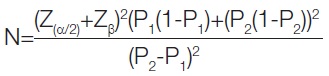
Represents the desired level of statistical significance
Zβ=0.84 Represents the desired power=0.84 for 80%
N=Minimum samples required for each group:
Primary variable=% of relief in sleep quality and stress level.
% of relief in Ashwagandha group=37.05% [19];
% of relief in Brahmi group=67.05% (expected 30% superiority)
Minimum sample size required
n=(1.96+0.84)2(0.3705)*(1-0.3705)+(0.6705)*(1-0.6705)2/(0.30)2=43 per group.
Considering 20% drop out=6
Total sample size required=2*43=86
A total of 86 patients will be recruited for the study [19].
Study Procedure
Participants meeting the inclusion criteria will be randomly assigned to control and trial groups in a 1:1 ratio. Randomisation will be done through a lottery method. Participants, research assistants, clinicians and other staff members will be blinded to the allocations, which will not be revealed until the trial is concluded. Throughout the trial, the principal investigator will evaluate all of the participants. Both the medicines will be packed in the same way. The blinding codes will remain confidential during the experiment. The patients will be assessed on every 15th day with the help of Perceived Stress Scale (PSS), Pittsburgh Sleep Quality Index (PSQI). The PSS and PSQI scale is selected because of its highest reliability and validity [20].
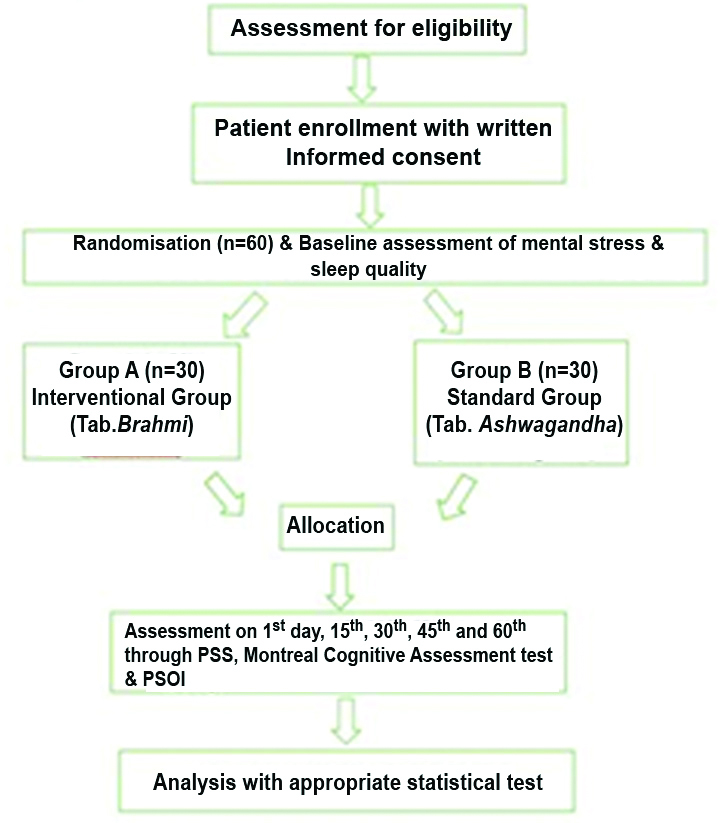
The primary outcome is to compare the effect of Interventional drug (Brahmi) and Standard drug (Ashwagandha) on mental stress level and quality of sleep in the subjects experiencing stress and the secondary outcome is to check for adverse effects (if any) of the trial drug on the basis of clinical features. The study design and recruitment are explained in [Table/Fig-1].
Flowchart of study design.
Drug procurement: Ashwagandha ghana (standard drug) and Brahmi ghana (trial drug) (each of 500 mg) in tablet form will be procured from Dhootpapeshwar pharmaceuticals.
The study intervention for both groups is explained in [Table/Fig-2].
| Group | Sample size | Intervention | Dose and frequency | Anupana | Duration | Follow-up |
|---|
| A(Experimental Group) | 30 | Tablet Brahmi | 500 mg at bed time | Water | 60 days | On 15th, 30th, 45th and 60th day. |
| B(Control group) | 30 | Tablet Ashwagandha | 500 mg at bed time | Water | 60 days | On 15th, 30th, 45th and 60th day. |
Statistical Analysis
The statistical analysis will be conducted using R software. The Mann-Whitney test and Chi-square test will be used for subjective parameters. Additionally for objective parameters t-test will be used for comparisons, finding the significance difference with a significance level set at 5%. Gantt chart is presented in [Table/Fig-3].
| Title | Evaluation of comparative efficacy of Ashwagandha (Withania somnifera) Vs Brahmi (Bacopa monnieri Linn) on stress level and quality of sleep in the subjects experiencing mental stress |
|---|
| Steps | Q1 | Q2 | Q3 | Q4 | Q5 | Q6 | Q7 | Q8 |
| Approval from IEC and CTRI approval | | | | | | | | |
| Review of literature | | | | | | | | |
| Drug preparation | | | | | | | | |
| Enrollment of patient | | | | | | | | |
| Data collection | | | | | | | | |
| Statistical analysis | | | | | | | | |
| Manuscript writing and publication | | | | | | | | |
Author Declaration:
Financial or Other Competing Interests: None
Was Ethics Committee Approval obtained for this study? Yes
Was informed consent obtained from the subjects involved in the study? Yes
For any images presented appropriate consent has been obtained from the subjects. NA
Plagiarism Checking Methods: [Jain H et al.]
Plagiarism X-checker: May 04, 2024
Manual Googling: Sep 16, 2024
iThenticate Software: Sep 18, 2024 (14%)
[1]. Agnivesa (edited by Vaidya Jadavaji Trikamji Acharya). Charaka Samhita. Sutrasthana, adhyaya 30th, Shlok no. 26 2017 New DelhiChaukhambha Publications [Google Scholar]
[2]. Burse RF, Dhimdhime RS, Zile KS, Maind AA, Jumnake VS, Depression from the point of view of chikitsa and kriya sharirWorld J Pharm Res 2018 8(1):518-24. [Google Scholar]
[3]. Salari N, Hosseinian-Far A, Jalali R, Vaisi-Raygani A, Rasoulpoor S, Mohammadi M, Prevalence of stress, anxiety, depression among the general population during the COVID-19 pandemic: A systematic review and meta-analysisGlobal Health 2020 16(1):01-11.10.1186/s12992-020-00589-w32631403 [Google Scholar] [CrossRef] [PubMed]
[4]. Agnivesha, Charaka Samhita, Ayurveda Dipika Commentary of Chakrapanidatta, translated by; Dr. Ram Karan Sharma and Vaidya Bhagwan Dash, Chaukambha Orientalia, Varanasi, Reprint Edition 2000 3:632chikitsasthana, Ch no: 1(3), Sloka no: 30-31 [Google Scholar]
[5]. Vyazovskiy VV, Delogu A, NREM and REM sleep: Complementary roles in recovery after wakefulnessNeuroscientist 2014 20(3):203-19.10.1177/107385841351815224598308 [Google Scholar] [CrossRef] [PubMed]
[6]. Marcovitch H, Black Medical Dictionary 2005 41st edLondonA & C Black Publishers:651 [Google Scholar]
[7]. Hirshkowitz M, Whiton K, Albert SM, Alessi C, Bruni O, DonCarlos L, National Sleep Foundation’s sleep time duration recommendations: Methodology and results summarySleep Health 2015 (1):40-43.10.1016/j.sleh.2014.12.01029073412 [Google Scholar] [CrossRef] [PubMed]
[8]. Boulos MI, Jairam T, Kendzerska T, Im J, Mekhael A, Murray BJ, Normal polysomnography parameters in healthy adults: A systematic review and meta-analysisLancet Respir Med 2019 7(6):533-43.10.1016/S2213-2600(19)30057-831006560 [Google Scholar] [CrossRef] [PubMed]
[9]. Chaput JP, Dutil C, Sampasa-Kanyinga H, Sleeping hours: What is the ideal number and how does age impact this?Nat Sci Sleep 2018 10:421-30.10.2147/NSS.S16307130568521 [Google Scholar] [CrossRef] [PubMed]
[10]. Schutte-Rodin S, Broch L, Buysse D, Dorsey C, Sateia M, Clinical guideline for the evaluation and management of chronic insomnia in adultsJ Clin Sleep Med 2008 4(5):487-504.10.5664/jcsm.2728618853708 [Google Scholar] [CrossRef] [PubMed]
[11]. Chaudhari K, Murthy ARV, Effect of rasayana on mental health-a review studyInternational Journal of Ayurveda and Alternative Medicine 2014 2:01-07. [Google Scholar]
[12]. Lopresti AL, Smith SJ, Ali S, Metse AP, Kalns J, Drummond PD, Effects of a Bacopa monnieri extract (Bacognize®) on stress, fatigue, quality of life and sleep in adults with self-reported poor sleep: A randomised, double-blind, placebo-controlled studyJournal of Functional Foods 2021 85:01-12.10.1016/j.jff.2021.104671 [Google Scholar] [CrossRef]
[13]. Benson S, Downey LA, Stough C, Wetherell M, Zangara A, Scholey A, An acute, double-blind, placebo-controlled cross-over study of 320 mg and 640 mg doses of Bacopa monnieri (CDRI 08) on multitasking stress reactivity and moodPhytother Res 2014 28(4):551-59.10.1002/ptr.502923788517 [Google Scholar] [CrossRef] [PubMed]
[14]. Sathyanarayanan V, Thomas T, Einöther SJ, Dobriyal R, Joshi MK, Krishnamachari S, Brahmi for the better? New findings challenging cognition and anti-anxiety effects of Brahmi (Bacopa monniera) in healthy adultsPsychopharmacology (Berl) 2013 227(2):299-306.10.1007/s00213-013-2978-z23354535 [Google Scholar] [CrossRef] [PubMed]
[15]. Atul U, Charu B, Umesh S, Efficacy of BrimhanaNasya and Ashwagandha (Withaniasomnifera (L.) Dunal) root powder in primary insomnia in elderly male: A randomized open-label clinical studyAyu 2020 41(3):15910.4103/ayu.AYU_177_19 [Google Scholar] [CrossRef]
[16]. Langade D, Kanchi S, Salve J, Debnath K, Ambegaokar D, Langade DG, Efficacy and safety of Ashwagandha (Withaniasomnifera) root extract in insomnia and anxiety: A double-blind, randomized, placebo-controlled studyCureus 2019 11(9):e579710.7759/cureus.5797 [Google Scholar] [CrossRef]
[17]. Choudhary D, Bhattacharyya S, Bose S, Efficacy and safety of Ashwagandha (Withania somnifera (L.) Dunal) root extract in improving memory and cognitive functionsJ Diet Suppl 2017 14(6):599-612.10.1080/19390211.2017.128497028471731 [Google Scholar] [CrossRef] [PubMed]
[18]. Khot SG, Tubaki BR, Gonugade VB, Efficacy of Brahmi vati in generalised anxiety disorder - Randomized double blind comparative clinical trialJ Ayurveda Integr Med 2022 13(2):10055210.1016/j.jaim.2022.10055235325682 [Google Scholar] [CrossRef] [PubMed]
[19]. Baik SH, Fox RS, Mills SD, Roesch SC, Sadler GR, Klonoff EA, Reliability and validity of the Perceived Stress Scale-10 in Hispanic Americans with English or Spanish language preferenceJ Health Psychol 2019 24(5):628-39.10.1177/135910531668493828810432 [Google Scholar] [CrossRef] [PubMed]
[20]. Wang L, Wu YX, Lin YQ, Wang L, Zeng ZN, Xie XL, Reliability and validity of the Pittsburgh Sleep Quality Index among frontline COVID-19 health care workers using classical test theory and item response theoryJ Clin Sleep Med 2022 18(2):541-51.10.5664/jcsm.965834534069 [Google Scholar] [CrossRef] [PubMed]