Introduction
A severe bimaxillary protrusion is an orthodontic condition impacted by a combination of both genetic and environmental factors. Abnormalities in size, shape, and alignment of the jaw are largely influenced by inherited craniofacial features and family history, which exacerbate the protrusion. environmental elements, such as non-nutritive sucking behaviours have a further impact on dental and jaw development, highlighting the condition’s multifactorial nature [1].
The global prevalence of severe bimaxillary protrusion varies by ethnicity and region. In the Indian population, it was noted to be in the range between 20% and 43%. Class I mal-alignment was observed between 66.7% in Rajasthan 7 (North India) and 49.2% in Bengaluru, Karnataka. In New Delhi, 34%-91.6% in the 5 to 9-year age bracket and 27.7% in the 10 to 13-year age bracket show a wide prevalence range, demonstrating the need for effective treatment modalities tailored to individual patient needs [2].
Orthodontic treatment of severe bimaxillary protrusion frequently includes mass retraction of anterior teeth with Mini-plates or mini screws for absolute anchorage [3]. While both anchorage methods provide stability, variations in design and placement may affect the rate of retraction and treatment outcomes.
Mini-screws can be inserted in various locations within the oral cavity, providing flexible anchorage points for different types of tooth movements. Additionally, mini-screws are generally easier to place and remove, reducing overall treatment time and patient discomfort. However, their smaller size and limited surface area may pose challenges in providing sufficient anchorage for extensive tooth movements in cases of severe protrusion [4].
On the other hand, mini-plates, typically anchored to the zygomatic buttress or mandibular cortical bone, offer robust and stable anchorage, making them suitable for complex orthodontic movements. Mini-plates are particularly beneficial in patients with poor bone quality or insufficient space for mini-screw placement. Despite their advantages, mini-plates require surgical placement and removal, which can increase the risk of complications and extend recovery time [5].
Moreover, patient compliance and comfort play significant roles in the success of orthodontic treatment. Mini-screws, being less invasive, tend to be more acceptable to patients, leading to higher compliance rates and better overall treatment experiences. Conversely, the surgical nature of mini-plate placement may cause apprehension and discomfort, potentially affecting patient cooperation.
Understanding and comparing the efficacy of mini-plates and mini-screws in severe bimaxillary protrusion cases is critical for making evidence-based treatment decisions and improving patient outcomes. Therefore, the present study aims to evaluate and compare the effectiveness of anterior teeth retraction using mini-screws and mini-plates in bimaxillary cases with the extraction of the first bicuspids.
Primary objectives:
To assess the amount of space closure in milli-meters using miniplate and mini-screw.
To assess the time taken or duration to achieve retraction of anterior teeth using miniplate and mini-screw.
Secondary objectives:
To assess the effect of mini plates and mini-screw on anterior teeth for external root resorption.
To assess the effect of mini plates and mini-screw on molars in all three planes.
Null hypothesis: No significant difference will be observed in the efficacy of mini-screws and mini-plates for the retraction of anterior teeth in severe bi-maxillary protrusion cases with the extraction of first bicuspids.
Alternate hypothesis: The retraction of anterior teeth in severe bi-maxillary protrusion cases with the extraction of first bicuspids will be greater with mini-plate or mini-screw.
Review of Literature
The management of bimaxillary protrusion includes mass retraction of anterior teeth with mini plates or mini screws for absolute anchorage. As both the methods provide stability, variations in design and placement usually affects the rate of retraction and outcomes [3].
Several studies have contributed valuable insights into the usage of mini-implants and mini-plates in correcting different malocclusions and providing orthodontic anchorage.
In 1999, Umemori M et al., studied the use of titanium mini-plates to correct anterior open bites by incising the posterior segment. They developed a static anchorage system using titanium mini-plates implanted in the upper and lower jaw to facilitate tooth movements. The procedure led to significant improvement without any adverse side-effects, reducing the open bite and causing minimal extrusion of the lower incisors. This system was also effective in managing the cant and level of the occlusal plane during orthodontic open-bite correction [6].
Liou EJW et al., conducted a randomised controlled trial to evaluate the stability of mini-screws under orthodontic forces. The study found that mini-screws act as stable anchorage units for orthodontic tooth movement but do not remain stationary like endosseous implants through a complete duration of retraction using rigid anchorage. Instead, mini-screws might move slightly according to the orthodontic loading in some patients. To mitigate the risks associated with mini-screw displacement Liou EJW et al., recommended placing mini-screws in non-tooth-bearing areas without foramen, major nerves, or blood vessel pathways and suggested maintaining a minimum of 2 mm clearance between the miniscrew and the tooth to avoid complications [7].
In a study by Chen J et al., the effectiveness of mini-screws and mini-plates for patients with Class III malocclusion in distalising the mandibular dentition was compared. The study found that both methods were successful in achieving skeletal and dento-alveolar changes, highlighting their versatility and effectiveness in orthodontic treatment for managing various malocclusions [8].
Miyawaki S et al., conducted a study to identify factors related to the stability of titanium screws fixed in the posterior mandibular region for orthodontic anchorage. The purpose was to evaluate the success rate and stability factors of titanium mini-screws placed in the buccal plate of the alveolar bone in the posterior mandibular region. The study concluded that factors such as screw length, type of placement surgery, immediate loading, location of mini implant placement, age, gender, tooth crowding, anteroposterior jaw base relationship, controlled periodontitis, and temporomandibular disorder symptoms did not show a significant association with success rates. However, smaller diameter screws, peri-implant tissue inflammation, and a high mandibular plane angle were associated with increased mobility and failure of titanium screws for orthodontic anchorage in the buccal alveolar bone [9].
El-Beialy AR et al., studied the anchorage loss of mini-screws by using forty mini-screws for retracting canines into the spaces of extracted first premolars in both arches. The study evaluated the movement of the mini-screws and their placement angles in the bone. The findings indicated that extrusion and movement occurred in the mini-screws head and tail in the direction of orthodontic loading, with no relationship found between these displacements and the placement angle or the length of the mini-screws in the bone [10].
In a study by Attia AM et al., the loss of static anchorage after en-masse retraction in bimaxillary protrusion patients using friction versus frictionless mechanics was evaluated. The study included thirty patients who required upper first pre molar extractions and maximum anchorage for retraction. Results showed that the frictionless group had significantly more anchorage loss at the crown of the first molar and greater mesial molar rotation than the friction group. Both groups had comparable tip, torque, and root resorption values, with mild gingival overgrowth and inflammation reported in the frictionless group due to loop irritation [11].
Materials and Methods
A randomised split-mouth controlled trial will be conducted, in the Department of Orthodontics and Dentofacial Orthopaedics at Sharad Pawar Dental College and Hospital, Sawangi, Wardha, Maharashtra, India from October 2024 to March 2026. The Institutional Ethics Committee standards have been obtained from the institute, with IEC no. (Ref. No. DMIHER (DU) /IEC/2024/254). The trial has been registered in CTRI with reference number CTRI/2024/07/070029. Complete history and records of the patient will be gathered once the patient chosen for the study will give their informed written consent.
Inclusion criteria: Subjects with skeletal Class I malocclusion with a bi-maxillary protrusion, regardless of vertical or horizontal growth, will be selected from the OPD of the orthodontic department. Class I bimaxillary cases in individuals aged between 15 to 30, with two distinct growth patterns: a vertical growth pattern with a Frankfurt-Mandibular Plane Angle (FMPA) above 32°, and an average growth pattern with an FMPA of 25°, inter-incisal angle of less than 100°, a Mandibular Incisor Position Angle (IMPA) greater than 110°, and Upper Incisor (UI) angles greater than 35° to both Nasion-points B (NB) and A (NA) will be included. Moreover, the inclusion criteria underscore the necessity of good oral hygiene among all selected patients [12].
Exclusion criteria: The study’s exclusion criteria cover a range of malocclusions and particular patient attributes. Dewey’s modification excludes Class I malocclusions, which include anterior crowding, anterior and posterior cross-bites, mesial migration of first molars in extraction space, and Class I subdivision. Furthermore, Class III malocclusions with Dewey’s modifications, whether skeletal or dental, and Class II malocclusions (both division I and division II) and their subdivisions are not considered., which include crowded anterior maxillary teeth with an underdeveloped maxilla, mandibular anterior crowding, and edge-to-edge relation with well-aligned arches and teeth. In addition, smokers, people with poor dental hygiene, patients receiving growth modulation therapy or medication therapy (NSAIDs, bisphosphonates, etc.,), people with systemic or bone diseases, and patients exhibiting other oral disease manifestations will be excluded.
Sample size calculation: The necessary sample size (N) is ascertained by applying the sample size calculation formula.
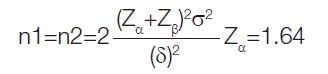
α=Type I error at both sides tailed
Zβ=0.84=Power at 80%
(sample size calculated based on dental parameter: difference horizontal L6s) [8]

Mean difference=1.9 mm
Standard deviation=2 mm [8]
The total sample size required for the present study will be 11.
Planned procedure: For the mini-screw and miniplate, respectively, two groups- Group-A (Mini screw) the control group, and Group-B (miniplate) the experimental group- will be formed by computerised generated random allocation. A web front end will be used to maintain the concealment of the randomisation. Before the course of treatment begins, pre-radiographic records and impressions will be taken. An MBT bracket system will be used for the initial treatment levelling and alignment phase. The extraction of all first premolars will be planned after the initial phase of arch alignment and levelling, and the patient will be sent for the planned extractions of premolars on both sides to the department of oral surgery. The mini screw will be placed in the mandible in the buccal shelf area of the designated side based on randomisation. The miniplate will be positioned by flap surgery in the same region on the contralateral side.
After a week of extraction, pre-retraction CBCT will be taken for both sides (T0) and retraction will begin using the sliding mechanics and elastomeric chains which will be attached to the hooks on the canine bracket on each side and miniplate hook on one side and mini-screw on other side, on completion of retraction post-CBCT records will be taken and evaluated. Clinically vernier calipers will be used for all, and digital CBCT software will be utilised for both pre- and post-retraction CBCT acquisitions. After the retraction phase is over, an assessment of the rate of en-masse retraction in terms of time required, amount of space closure, effect on the roots of anterior teeth, and effect on molars in all three planes will be assessed. This will be assessed by measuring millimetric readings on CBCT that are recorded one week after bicuspid extraction and at the end of space closure.
Where:
T0: First week after extraction of premolars
T1: At completion of retraction
Primary outcome: The amount of space closure, in millimetres, achieved using mini plates and mini-screws for anterior teeth retraction will be measured, and the time taken for en masse retraction of anterior teeth will be assessed to determine which device offers a more efficient treatment timeline for severe bimaxillary protrusion cases with first bicuspid extraction.
Secondary outcome: External root resorption in anterior teeth due to mini plates and mini-screws will be evaluated, highlighting any adverse effects on dental health. Furthermore, the impact on the molars in anteroposterior, vertical, and transverse planes will be examined to identify any unintended dental movements or loss of anchor molar teeth stability, offering a comprehensive view of the implications of using these anchorage devices in orthodontic treatment.
Statistical Analysis
Statistical analysis of the data will be done using R Project version 4.3.2. The data collected from the outcomes of the study, amount of space closure in millimetres, and time taken for the retraction of anterior teeth will be analysed using the Mann-Whitney test and student t-test. A p-value less than 0.05 will be considered significant.
Safety assessment: An account of any adverse events, including non-vitalisation of teeth, hyalinisation and necrosis of the bone, inflammatory apical root resorption, dehiscence and fenestration, and so on. The Institution-based Ethics Committee will be informed the next day of any noteworthy negative occurrences.
[1]. Sivakumar A, Sivakumar I, Sharan J, Kumar S, Gandhi S, Valiathan A, Bimaxillary protrusion trait in the Indian population: A cephalometric study of the morphological features and treatment considerationsOrthod Waves 2014 73:95-101.10.1016/j.odw.2014.06.004 [Google Scholar] [CrossRef]
[2]. Kharbanda OP, Orthodontics-diagnosis and Management of Malocclusion and Dentofacial Deformities 2009 1st edUSAMosby Elsevier:20-26. [Google Scholar]
[3]. Nanda R, Uribe FA, Temporary anchorage devices in orthodontics 2009 Mosby Elsevier [Google Scholar]
[4]. Truong VM, Kim S, Kim J, Lee JW, Park YS, Revisiting the complications of orthodontic miniscrewBioMed Res Int 2022 2022:872041210.1155/2022/8720412 [Google Scholar] [CrossRef]
[5]. Cornelis MA, Scheffler NR, Mahy P, Siciliano S, De Clerck HJ, Tulloch JFC, Modified miniplates for temporary skeletal anchorage in orthodontics: Placement and removal surgeriesJ Oral Maxillofac Surg Off J Am Assoc Oral Maxillofac Surg 2008 66:1439-45.10.1016/j.joms.2008.01.037 [Google Scholar] [CrossRef]
[6]. Umemori M, Sugawara J, Mitani H, Nagasaka H, Kawamura H, Skeletal anchorage system for open-bite correctionAm J Orthod Dentofacial Orthop 1999 115:166-74.10.1016/S0889-5406(99)70345-8 [Google Scholar] [CrossRef]
[7]. Liou EJW, Pai BCJ, Lin JCY, Do miniscrews remain stationary under orthodontic forces?Am J Orthod Dentofacial Orthop 2004 126:42-47.10.1016/j.ajodo.2003.06.018 [Google Scholar] [CrossRef]
[8]. Chen J, Patino JI, Chang JZC, Yao CCJ, Nielsen IL, A comparison of two TAD Techniques (Miniscrews Versus Miniplates) for treating Class III malocclusion and the associated skeletal and dental effectsTaiwanese Journal of Orthodontics 2019 31(3):1 [Google Scholar]
[9]. Miyawaki S, Koyama I, Inoue M, Mishima K, Sugahara T, Takano-Yamamoto T, Factors associated with the stability of titanium screws placed in the posterior region for orthodontic anchorageAm J Orthod Dentofacial Orthop 2003 124:373-78.Available from: https://doi.org/10.1016/S0889-5406(03)00565-1 [Google Scholar]
[10]. El-Beialy AR, Abou-El-Ezz AM, Attia KH, El-Bialy AM, Mostafa YA, Loss of anchorage of miniscrews: A 3-dimensional assessmentAm J Orthod Dentofacial Orthop 2009 136:700-07.10.1016/j.ajodo.2007.10.059 [Google Scholar] [CrossRef]
[11]. Attia AM, Shibl LA, Dehis HM, Mostafa YA, El-beialy AR, Evaluation of anchorage loss after en masse retraction in orthodontic patients with maxillary protrusion using friction vs frictionless mechanics: Randomized clinical trialAngle Orthod 2024 94(5):532-40.Published Online First: 24 May 202410.2319/113023-791.1 [Google Scholar] [CrossRef]
[12]. Jacobson A, Jacobson RL, Radiographic Cephalometry: From Basics to 3-D Imaging 2006 Quintessence Pub [Google Scholar]