Nail Patella Elbow Syndrome Presenting with Depression: A Case Report
Deepa N Sangolkar1, Shweta Borkar2, Nakul Ambhore3, Ashish Ambhore4, Nayan Sinha5
1 Assistant Professor, Department of Psychiatry, Datta Meghe Medical College, Nagpur, Datta Meghe Institutes of Higher Education and Research (DU), Nagpur, Maharashtra, India.
2 Assistant Professor, Department of Internal Medicine, Datta Meghe Medical College, Nagpur, Datta Meghe Institutes of Higher Education and Research (DU), Nagpur, Maharashtra, India.
3 Speciality Medical Officer, Department of Orthopaedics, Dr. Babasaheb Ambedkar Hospital and Research Center, Nagpur, Maharashtra, India.
4 Assistant Professor, Department of Radiodiagnosis, N. K. P. Salve Institute of Medical Sciences and Research Centre and Lata Mangeshkar Hospital, Digdoh, Nagpur, Maharashtra, India.
5 Junior Resident, Department of Psychiatry, Jawaharlal Nehru Medical College, Nagpur, Datta Meghe Institutes of Higher Education and Research (DU), Nagpur, Maharashtra, India.
NAME, ADDRESS, E-MAIL ID OF THE CORRESPONDING AUTHOR: Dr. Deepa N Sangolkar, Assistant Professor, Department of Psychiatry, Datta Meghe Medical College, Wanadongri, Nagpur-441110, Maharashtra, India.
E-mail: drdeepasangolkar@gmail.com
Nail-Patella Syndrome (NPS) is a rare autosomal dominant illness. Patients typically exhibit a tetrad of dysplastic finger or toenails, elbow dysplasia, hypoplastic or missing patellae, and iliac horns as their first musculoskeletal and dermatological symptoms. A higher occurrence of psychiatric disorders, such as depression and attention deficit hyperactivity disorder, has also been reported with NPS. This is a rare case of NPS, presenting with depression as the major symptom in an 18-year-old young girl who presented to the psychiatry Outpatient Department (OPD) with depressive symptoms like persistent low mood, loss of pleasure or anhedonia, loss of appetite, disturbed sleep, and thoughts of death. After 10 days of treatment with antidepressant drugs like Benzodiazepines, she was discharged and followed-up on an OPD basis. After a thorough evaluation, hypoplastic patella, swan-necked nails, radial head subluxation, and right eye glaucoma were also noted, and a final diagnosis of Nail-Patella Syndrome was made. A case of NPS can present in any department, such as in Medicine for nail dysplasia, in Orthopaedics for elbow or patella dysplasia, or in Dermatology for iliac horns. Here, the case was primarily presented to the Psychiatry department and later managed by a team of physicians, orthopaedicians, and psychiatrists. Careful illustration of the family history reveals more cases.
Aplastic patella, Attention deficit hyperactive disorder, Dysplastic nails
Case Report
An 18-year-old girl patient presented to the Psychiatry OPD with complaints of persistent low mood, frequent crying spells on trivial issues for one month. She had started losing interest in her day-to-day activities, such as attending college or doing routine household chores, along with low concentration in her studies leading to low scores in her exams. Her sleep was disturbed, and her appetite was lost. The patient experienced easy fatigability and a lack of motivation. She occasionally had passive death wishes too. The patient started experiencing these symptoms three months back after a familial stressor, and the intensity of the symptoms gradually increased with time thereafter. Owing to the severity of the symptoms, the patient was admitted to the psychiatry ward, and based on these symptoms, a diagnosis of major depressive disorder (according to DSM-5 criteria) [1] was made.
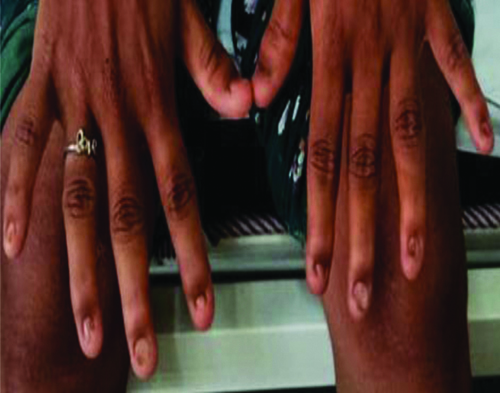
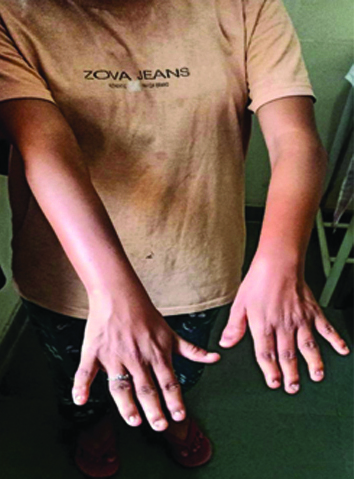
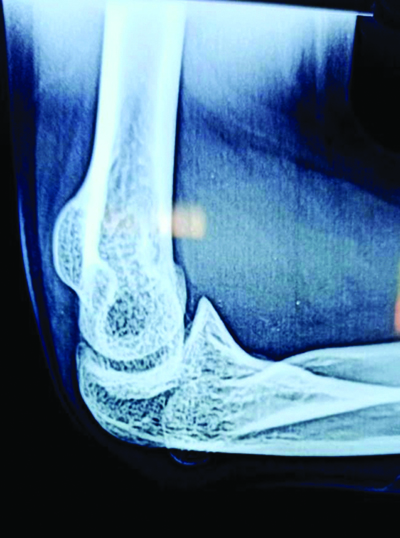
A thorough general examination of the patient revealed that the nails of both upper and lower limbs [Table/Fig-1,2] were deformed. Similar nail deformities were present in her mother and younger sister since birth, but they did not suffer from any major depressive symptoms like her. The patient also had musculoskeletal problems, like instability of her left knee since childhood and clicking in the knee while climbing stairs. The left elbow joint [Table/Fig-3] was also deformed owing to radial head subluxation.
Deformed nails of upper limbs.
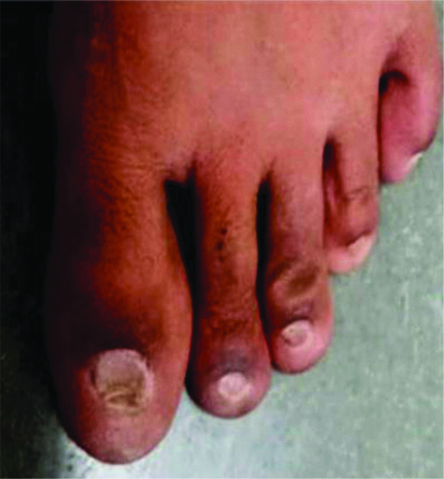
Left-sided radial head subluxation.
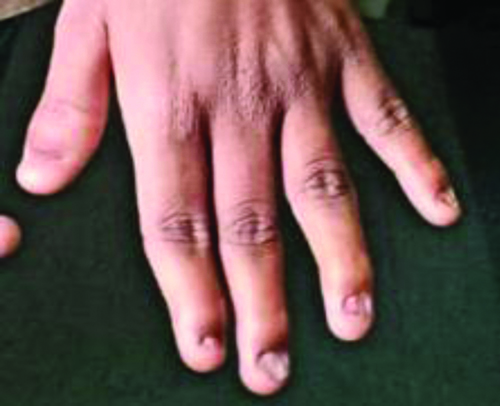
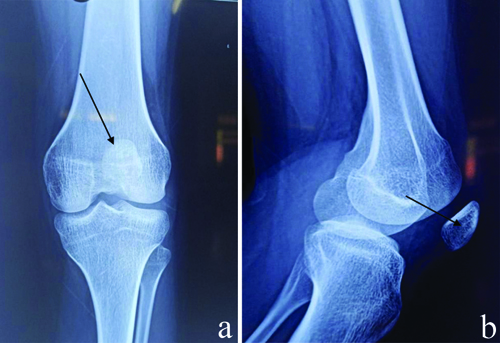
She was thereafter referred to the Medicine Department for her nail deformities and gastric complaints. All routine investigations including haemoglobin were normal. The patient was given a provisional diagnosis of irritable bowel syndrome with a high suspicion of NPS and was referred for an orthopaedic and ophthalmology opinion. The orthopaedic evaluation revealed swan neck deformity in her fingers [Table/Fig-4]. On radiological evaluation, she was confirmed to have left radial head subluxation [Table/Fig-5] and hypoplastic patella [Table/Fig-6a,b]. Ophthalmology evaluation revealed right eye glaucoma. The management plan for this patient was regular follow-ups every month to monitor her depressive symptoms and a close watch on the progression of her ocular disease or development of any renal disease. The patient was followed-up for eight months after discharge with gradual tapering of medications upon significant improvement in her depressive features and no progression of ocular disease.
Swan neck deformity in fingers.
Digital X-ray of right elbow showing radial head subluxation.
a) Digital X-ray of left knee showing hypoplastic patella (arrow). b) Left knee showing hypoplastic patella.
Discussion
The NPS, also known as osteo-onychodysplasia or Fong’s syndrome or Hereditary osteo-onychodysplasia, is an uncommon condition with an autosomal dominant pleiotropic inheritance pattern that includes the characteristic tetrad of fingernail dystrophy, elbow dysplasia, patellar alterations, and iliac horns. It occurs in about 1 in 50,000 people [2,3]. The patient under consideration showed all these signs except iliac horns. Research has also shown that individuals diagnosed with NPS are at an increased risk of developing mood disorders compared to the general population. One study of 50 NPS patients showed a 22% increase in Conners’ Adult ADHD Scales Scores and a 40% increase in Beck Depression Inventory-II scores [4].
Nail-Patella Syndrome (NPS) results from a mutation in the LMX1B gene, which is located on the long arm of chromosome 9q34 [5]. The LIM-homeodomain type transcription factor LMX1B gene is essential for the typical dorso-ventral patterning of the limb [2,3]. The expression of collagen type IV, which is necessary for the formation of glomerular basement membrane, is also regulated by the gene [6]. There is both inter- and intra-familial heterogeneity in the presentation of the disease due to varied penetrance. Nails could be dystrophic, hypoplastic, or even absent. Eighty to ninety percent of patients have these birth malformations, which are typically bilateral and symmetrical in distribution [2].
In comparison to other fingers, the thumbnails are more severely affected, and nail irregularities worsen until they reach the little finger. In the case reported here, based on the history of loss of appetite, her nail deformities were initially thought to be koilonychia. Distal inter-phalangeal joints and reduced skin creases were common over the affected fingers. The patella is frequently involved and often appears hypoplastic or absent. On rare occasions, the patella may become dislocated or displaced, leading to painful, unstable, and limited knee extension. The radial head may subluxate due to lateral epicondyle hypoplasia and radial head dysplasia, which manifests as elbow asymmetry.
Clinical investigations occasionally show the presence of iliac horns, which are present in 70-80% of individuals. Between 3 and 15% of people develop end-stage renal illness requiring dialysis, while upto 40% experience kidney issues along with extraskeletal symptoms. Proteinuria is a common finding in patients who may or may not exhibit any symptoms during examination. Other symptoms of NPS include ocular hypertension, cloverleaf iris pigmentation (Lester’s sign), attention deficit hyperactivity disorder, sensory neuropathy, irritable bowel syndrome, and persistent constipation [7-9]. Ocular and renal issues are less commonly encountered. Only a few cases of refractory glaucoma have been described, mainly in non Indian populations [10].
Among Indian studies, the presenting features are related to the musculoskeletal system [Table/Fig-7] [11-18]. Psychiatric disorders have not been described in NPS in Indian studies. Zolotov LN, Reinstein E, described a case of NPS presenting to the psychiatry department with schizophrenia [19]. In a study of 50 NPS cases (38 females & 12 males), López-Arvizu C et al., reported that individuals with NPS had higher levels of co-occurrence of ADHD and MDD symptoms than the general population [4]. The co-occurrence of these symptoms may be connected to mesencephalic dopaminergic neurologic pathway anomalies caused by LMX1B loss of function.
Cases of Nail Patella Syndrome (NPS) in literature [11-18, Present study].
| S. No. | Author | Publication year | Place of study | Age of patient | Presentation/Clinical findings |
|---|
| a) | Sanke S et al., [11] | 2019 | India | 4½-year-old boy | Exhibited with an inadequate extension of the bilateral elbows, delayed emergence of all fingernails, and nearly absent thumbnails that had been present since birth. |
| b) | Aboobacker IN et al., [12] | 2018 | India | 31-year-old primigravida | Presented with recently discovered proteinuria, normal blood pressure, 20 weeks of pregnancyy along with flexion and hyperextension abnormalities of interphalangeal joints of both hands, pitting of the nails in upper and lower limbs, hypoplastic patella, subluxation of the radial head at the elbow, and symmetrical bilateral iliac horns. |
| c) | Virani ZA et al., [13] | 2021 | India | 37-year-old female | Presented with nephrotic range proteinuria with normal serum creatinine. |
| d) | Agarwal VK et al., [14] | 1974 | India | Indian family | Presented with nail malformations, hip malformationns, finger interphalangeal joint hyperextension. |
| e) | Roy S et al., [15] | 2014 | India | 28-year-old female | Presented with right elbow pain and restricted movement. |
| f) | Dharmshaktu GS and Dharmshaktu IS [16] | 2023 | India | Cases series of three cases | All three cases were diagnosed incidentally. The first two cases were a father-daughter duo. The 14-year-old girl presented with abdominal pain and was diagnosed to NPS based on the symptoms of iliac horn, hypoplastic nails and bilateral small patellae. The 42-year-old father had even smaller patella, bilateral resultant hypertrophy of tibial tuberosity, iliac horns and multiple hypoplastic fingernails.The third case presented with fracture femur following road traffic accident. Patient had small patella, iliac horns and multiple hypoplastic and deformed multiple fingernails. |
| g) | Padmanabhan LD et al., [17] | 2017 | India | Prenatal diagnosis of NPS | Prenatal detection of NPS at 19 weeks of gestation in 21-year-old female, while her husband had NPS. Ultrasound evaluation showed a single live foetus with corresponding to 19 weeks with rotational defect at the knee joint in both the lower limbs, feet pointing towards the gluteal region and restricted extension at the knee joints. |
| h) | Khadka N, et al., [18] | 2023 | India | 17-year-old male | Clinical tetrad of skeletal abnormalities, multiple bony deformities, advanced renal failure, hypothyroidism, and dilated cardiomyopathy. |
| i) | Present case | | India | 18-year female | Patient presented with depressive features and findings consistent with NPS. |
No genetic test was performed in the present case as the diagnosis of NPS was reached primarily based on clinical and radiological findings.
Conclusion(s)
This uncommon case of Nail Patella Elbow Syndrome underscores the importance of screening the patient’s family members and demonstrates how the condition might appear in an unexpected way due to potential genetic defects. Additionally, it provides a foundation for understanding and diagnosing individuals with improperly formed skeletal structures and nails. A case of NPS can present in any department, such as in medicine for nail dysplasia, in orthopaedics for elbow or patella deformity, or in dermatology for iliac horn. Here, the case primarily presented in psychiatry and was later managed by a team of physicians, orthopaedicians, and psychiatrists. The treatment of such hereditary illnesses may be made possible by research in fields like gene therapy. Future research on individuals with NPS should include additional measures to assess correlations between symptoms and abnormalities of attention, mood, anxiety, and pain.
Author Declaration:
Financial or Other Competing Interests: None
Was informed consent obtained from the subjects involved in the study? Yes
For any images presented appropriate consent has been obtained from the subjects. Yes
Plagiarism Checking Methods: [Jain H et al.]
Plagiarism X-checker: May 31, 2023
Manual Googling: Aug 20, 2024
iThenticate Software: Jun 07, 2024 (5%)
[1]. Nemeroff CB, Weinberger D, Rutter M, MacMillan HL, Bryant RA, Wessely S, DSM-5: A collection of psychiatrist views on the changes, controversies, and future directionsBMC Med 2013 11(1):202 [Google Scholar]
[2]. Law AH, Chew LC, Nail-patella syndrome: A case reportProceedings of Singapore Healthcare 2013 22(1):70-74. [Google Scholar]
[3]. Lucas GL, Opitz JM, Wiffler C, The nail-patella syndrome: Clinical and genetic aspects of 5 kindreds with 38 affected family membersThe Journal of Pediatrics 1966 68(2):273-88. [Google Scholar]
[4]. López-Arvizu C, Sparrow EP, Strube MJ, Slavin C, DeOleo C, James J, Increased symptoms of attention deficit hyperactivity disorder and major depressive disorder symptoms in nail- patella syndrome: Potential association with LMX1B loss-of-functionAm J Med Genet B Neuropsychiatr Genet 2011 156B(1):59-66. [Google Scholar]
[5]. Sweeney E, Fryer A, Mountford R, Green A, McIntosh I, Nail patella syndrome: A review of the phenotype aided by developmental biologyJ Med Genet 2003 40:153-62.10.1136/jmg.40.3.153 [Google Scholar] [CrossRef]
[6]. Lee BH, Cho TJ, Choi HJ, Kang HK, Lim IS, Park YH, Clinico-genetic study of nail-patella syndromeJ Korean Med Sci 2009 24(Suppl 1):S82-86.PMCID: PMC263319819194568 [Google Scholar] [PubMed]
[7]. Senguttuvan NB, Sivaraman A, Kandasamy D, Marimuthu K, Nail patella syndrome: A rare cause of renal failure in a young adultPan Afr Med J 2011 9:3110.4314/pamj.v9i1.71207 [Google Scholar] [CrossRef]
[8]. Goshen E, Schwartz A, Zilka LR, Zwas ST, Bilateral accessory iliac horns: Pathognomonic findings in Nail patella syndrome. Scintigraphic evidence on bone scanClin Nucl Med 2000 25(6):476-77. [Google Scholar]
[9]. McIntosh I, Dunston JA, Liu L, Hoover-Fong JE, Sweeney E, Nail patella syndrome revisited: 50 years after linkage: Nail patella syndromeAnn Hum Genet 2005 69(pt4):349-63. [Google Scholar]
[10]. Pallozzi Lavorante N, Iester M, Bonzano C, Bagnis A, Traverso CE, Cutolo CA, Nail-Patella syndrome and glaucoma: A case report and review of the literatureCase Rep Ophthalmol 2022 13(3):984-90.PMCID: PMC980812410.1159/00052723436605036 [Google Scholar] [CrossRef] [PubMed]
[11]. Sanke S, Garg T, Jassi R, Maheshwari A, Nail-patella syndrome: A classic caseDermatol Pract Concept 2019 9(4):271 [Google Scholar]
[12]. Aboobacker IN, Krishnakumar A, Narayanan S, Hafeeque B, Gopinathan JC, Aziz F, Nail-Patella syndrome: A rare cause of nephrotic syndrome in pregnancyIndian Journal of Nephrol 2018 28(1):76-78. [Google Scholar]
[13]. Virani ZA, Rajput P, Vora H, Shah BV, Retrospective diagnosis of nail-patella syndromeIndian Journal of Nephrol 2021 31(5):485-87. [Google Scholar]
[14]. Agarwal VK, Mukherjee A, Dutta P, Kucheria K, Varma SK, An Indian family with nail-patella syndromeIndian Journal of Pediatrics 1974 41(322):364-65. [Google Scholar]
[15]. Roy S, Nail patella syndrome- A case reportInt J Res Health Sci 2014 2(2):678-82. [Google Scholar]
[16]. Dharmshaktu GS, Dharmshaktu IS, Nail-Patella syndrome: A case series from northern IndiaCureus 2023 15(10):e47792PMCID: PMC1067662510.7759/cureus.4779238022029 [Google Scholar] [CrossRef] [PubMed]
[17]. Padmanabhan LD, Yesodharan D, Nampoothiri S, Prenatal diagnosis of nail patella syndrome: A case reportIndian J Radiol Imaging 2017 27(3):329-31. [Google Scholar]
[18]. Khadka N, Pooja KC, Sharma S, Sharma S, Rayamajhi S, Dilated cardiomyopathy and Nail-Patella Syndrome: A case reportCureus 2023 15(11):e4896910.7759/cureus.48969 [Google Scholar] [CrossRef]
[19]. Zolotov LN, Reinstein E, Schizophrenia and nail patella syndrome: The dopamine connectionIsr Med Assoc J 2018 20(8):496-98. [Google Scholar]